Material Definition
Fiber identity, form, fineness, denier/count, finish, package, blend and intended conversion become a comparable brief.
Sampling and specification support
Tencel organizes fiber, yarn and fabric requests around stated inputs, decision gates and written outputs. The service begins by identifying the material form, conversion route, construction, acceptance method and commercial stage instead of assuming that a familiar name is a complete specification.

Four workstreams
Fiber identity, form, fineness, denier/count, finish, package, blend and intended conversion become a comparable brief.
Composition, weave/knit, GSM, usable width, color, finish, drape, hand and care are stated with units.
Lab dip, strike-off, hand sample, prototype and production lot remain separate approvals with change points.
Approved specification and evidence stay attached to MOQ, quantity, lead time, packaging and destination.
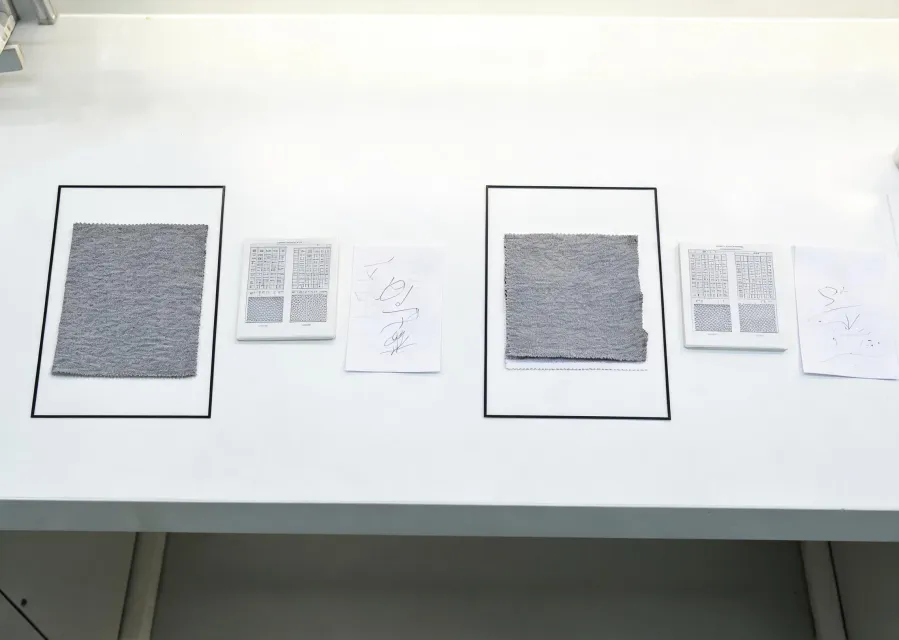
Illustrative case 01
Background: A knit brief names softness but omits construction, GSM, width, finish and care.
Process: Define fiber and blend, yarn count, knit structure, GSM, usable width, dye/finish route and target hand. Agree dimensional-stability method, wash/dry cycle, specimen marks and tolerance.
Decision output: A sample comparison that keeps hand, shrinkage, shade and construction connected. This is a process illustration, not a customer result.
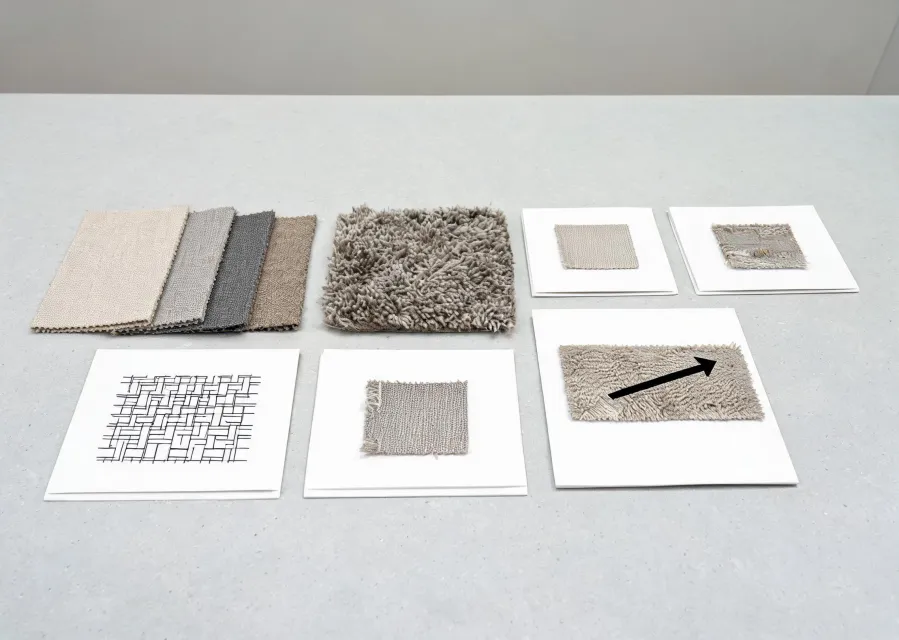
Illustrative case 02
Background: An interior request assumes a fiber name determines abrasion behavior and care.
Process: Record construction, pile or surface, backing, GSM, width, finish and intended traffic. Select the applicable abrasion, colorfastness, dimensional or cleaning procedures.
Decision output: A construction-specific prototype and test plan that does not extend one specimen to other colors, finishes or lots.
Start with the missing fields
Include what is known and mark open items. A response can then separate specification, sample, testing and commercial questions.